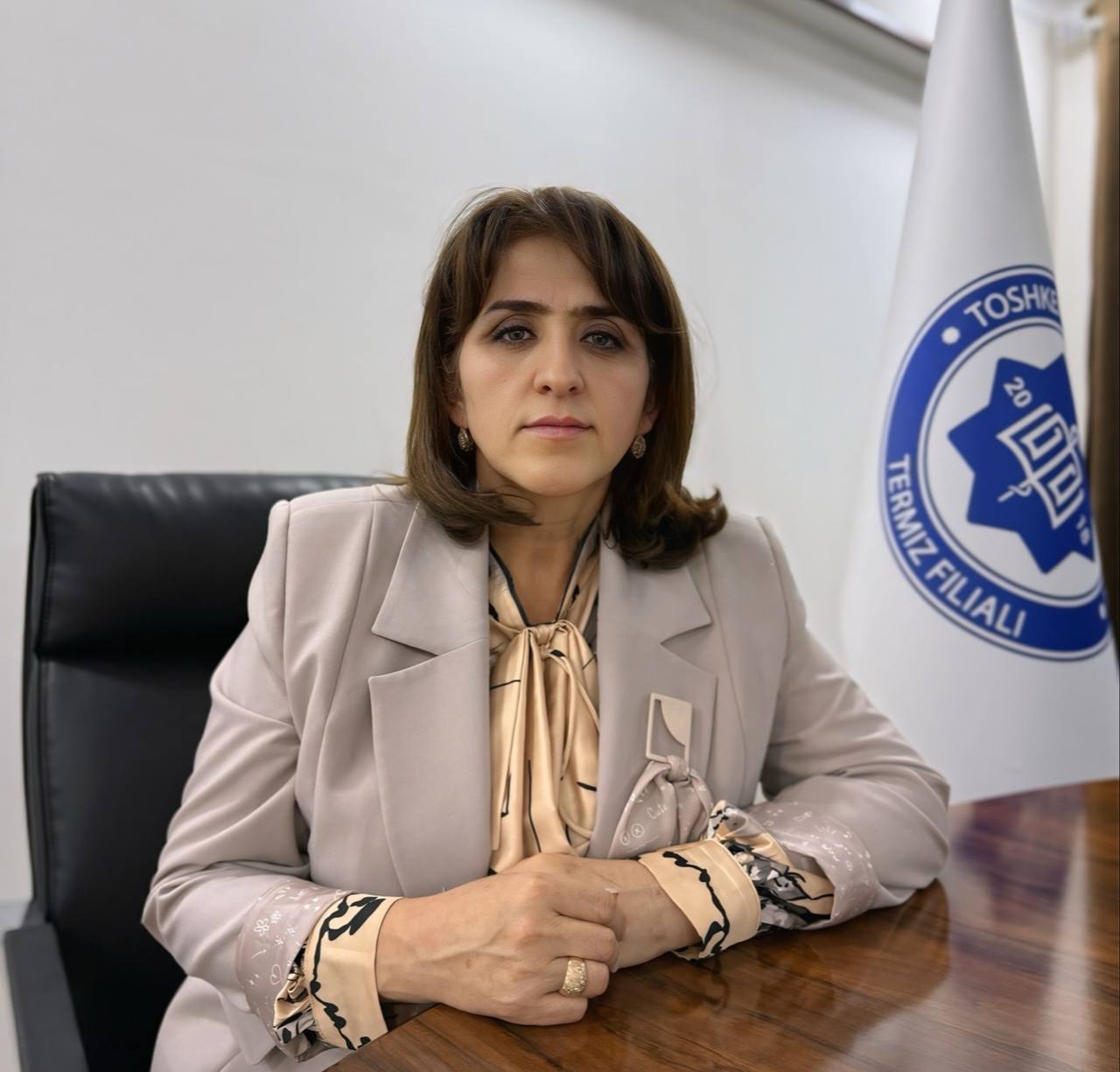
Narzullayeva Gulchehra Qudratovna
Dean
e-mail:
Narzullayevagulchehra@gmail.com
Phone number:
+998-97-850-20-10
History of the Faculty
Tashkent Medical Academy, Termiz Branch, Faculty of Joint Education
July 6, 2021 of the Cabinet of Ministers of the Republic of Uzbekistan “On approval of the regulation on the procedure for organizing educational activities based on the joint educational program of the Republic of Uzbekistan and foreign partner higher education organizations” In accordance with the charter approved by the annex to the decision No. 421, the “Faculty of Joint Education” was established at the Termiz branch of the Tashkent Medical Academy on the basis of the “Department for the Organization of Joint Education Programs”. The Faculty of Joint Education is the youngest faculty among branch faculties and the only faculty operating on the basis of Joint Programs. The Faculty of Joint Education, which connects Uzbekistan with South and Central Asia and Eastern Europe, provides students with a unique opportunity to study at the highest level of higher education in the region.
We strive to spread knowledge, deep research and academic excellence throughout the region through our educational system. On the basis of the Faculty of Joint Education, the main building of which is located in the city of Termiz, there are contracts with 26 academic departments – basic sciences and clinical bases in hospitals. In addition, we ensure that our students receive quality education and practical skills through a joint program.
Faculty classification
- Type of education: Bachelor,
- Specializations (bachelor
6091020 – Treatment work
6091030 – Pediatric work
- Qualification: General practitioner, specialist in a narrow field
- Form of education: full-time
- Language of education: Russian,
- Faculty qualifications: Professional activities of undergraduates in the areas of treatment, pediatrics include:
- Preventing the emergence of diseases among the population by means of prevention and fighting against epidemics;
- Diagnosis of patients’ diseases and pathological conditions;
- Emergency diagnosis;
- Development and implementation of all types of preventive measures for acute and chronic diseases common among the population;
- Organization of medical activities in the primary health care system;
- Development and implementation of all types of preventive measures for acute and chronic diseases common among the population;
- To acquire the necessary theoretical and practical knowledge on the scope of emergency aid and to apply it in practice;
- To acquire modern information and knowledge about diseases and problems that are relevant in the field of medicine and regularly get acquainted with information about them during the course of work;
- Targeted application of modern diagnosis and treatment standards for common diseases among the population;
- In cases where rehabilitation measures are required, timely implementation of measures to apply them to the extent necessary for the population;
- Effective use of available resources in cooperation with organizations responsible for social protection of the population;
- rational use of labor resources of the primary healthcare system and participation in their effective management;
- Participation in conducting scientific research activities on relevant issues in the field of medicine at the level of demand. Types of professional activities of bachelors in the field of vocational education (medical work):
- medical preventive;
- quick and urgent medical assistance;
- diagnosis and treatment;
- rehabilitation;
- medical and social;
- organizational management;
- scientific research.